
Ayurvedic Treatment for Gastritis for Long-Term Digestive Wellness
In today’s hyper-connected, high-pressure professional landscape, the stress of corporate life characterized by unrelenting deadlines, long hours at the desk, erratic meal schedules, and a heavy reliance on quick stimulants like coffee has created a perfect storm for modern digestive disorders. For the middle-aged IT professional in India, a relentless schedule often means digestive health is the first casualty. Among these widespread ailments, gastritis the inflammation of the stomach lining is one of the most common, yet stubbornly recurring, sources of distress.
The symptoms are agonizingly familiar: a persistent, searing acidity, uncomfortable bloating and heaviness, chronic indigestion, a gnawing, burning sensation in the upper abdomen, or debilitating nausea and vomiting that follows every meal. For many, gastritis escalates beyond an occasional discomfort, evolving into a chronic, unwelcome companion (Amlapitta) that dictates what can be eaten, where one can travel, and when the next flare-up, triggered by a stressful presentation or a spicy takeaway, will strike.
While conventional, modern treatments—primarily antacids and proton pump inhibitors (PPIs) offer rapid, symptomatic relief, they rarely address the deeper, systemic imbalance that creates the disease in the first place. These treatments are often criticized for temporarily suppressing the stomach’s natural acid production without healing the underlying inflammation or correcting the lifestyle patterns that initiate it.
Dheemahi Ayurvedic Centre with its heritage rooted in five generations of authentic healing, offers a profound and complete solution. Through the authentic Ayurvedic treatment for gastritis the goal is not merely to silence the discomfort, but to meticulously restore harmony to the body’s core digestive energies, balance the mind-gut axis, and establish an empowering, sustainable lifestyle. This holistic method brings not just fleeting comfort, but truly long-term digestive wellness and renewed vitality, ensuring the IT professional can focus on their code and career, not their stomach.

Schedule a personalized consultation at Dheemahi Ayurveda. Begin your journey to wellness with expert guidance in holistic Ayurvedic care, tailored treatments, and natural healing solutions
How Ayurveda Decodes Gastritis: The Science of Amlapitta
Ayurveda, the ancient Indian science of life, provides a complex, systemic understanding of gastritis that moves far beyond a simple diagnosis of stomach inflammation. It is classified primarily as Amlapitta, a disorder arising from a serious aggravation of the body’s metabolic fire, the Pitta Dosha.
Pitta Dosha, composed of the elements Fire (Agni) and Water (Jala), governs all metabolic processes, heat regulation, digestion, and intellectual transformation in the body. When Pitta is in balance, the Agni (digestive fire) is sharp, efficient, and transforms food into nourishment smoothly.
However, the intense, demanding lifestyle of a modern professional is a Pitta-provoking existence. When Pitta is vitiated by stress, irregular meals, or heating foods, its inherent qualities of Ushna (hot) and Tikshna (sharp/intense) become exaggerated. This generates a pathological excess of Amla Guna (sour/acidic quality) and heat in the Amashaya (the stomach).
This surge of heat and acid corrodes the delicate Shleshma Kala (the protective mucosal layer) of the stomach, initiating the inflammatory state we call gastritis. Furthermore, the imbalance destabilizes the Agni (digestive fire), leading to incomplete digestion and the subsequent formation of sticky, circulating metabolic toxins known as Ama. This cycle of inflammation, toxic buildup, and heightened acidity is the root of chronic Amlapitta.
The Two Faces of Amlapitta
Ayurveda further classifies Amlapitta based on the direction in which the aggravated Pitta is expelled:
- Urdhvaga Amlapitta (Upward Movement): This form is highly relevant to modern GERD or severe acid reflux. Symptoms include sour/bitter belching (Amlodgara), heart-burn (Hrid-Daha), nausea (Utklesha), and vomiting (Chardi).
- Adhoga Amlapitta (Downward Movement): This is characterized by symptoms related to the lower GI tract, such as diarrhea, loose motions, or a burning sensation during defecation, indicating that the aggravated Pitta is being expelled downward.
At Dheemahi, diagnosis involves determining not only the primary Dosha imbalance (Pitta and its association with Kapha or Vata) but also its direction and severity, ensuring the treatment is precisely tailored.
Root Causes: Dissecting the Patient’s Nidana (Etiology)
The Ayurvedic principle of Nidana Parivarjana (removing the cause) is the first and most crucial step toward permanent cure. For the modern professional, the causes of Amlapitta are often systemic and interwoven with their daily routine:
| Ayurvedic Nidana | Modern Professional Context | Impact on Digestion |
| Vishamashana (Irregular Eating) | Skipping lunch for a quick meeting; late-night coding sessions fueled by heavy, oily food. | Disrupts Agni rhythm, leading to acid hypersecretion and fermentation of food (Vidagdhajirna). |
| Prajñāparādha (Intellectual Error/Stress) | Chronic anxiety over deadlines; suppressed anger/frustration with workplace politics. | Drives the mind-gut axis; mental stress directly stimulates the production of corrosive stomach acid, aggravating Pitta. |
| Katu, Amla, Ushna Ahara (Spicy, Sour, Hot Diet) | Excessive consumption of highly processed, fermented South Indian dishes (idli, dosa), spicy junk food, or excessive pickles and sauces. | Directly adds heat and sharpness (Pitta qualities) to the stomach, eroding the protective lining. |
| Vega Dharana (Suppression of Urges) | Holding hunger, thirst, or delaying bowel/bladder movements to complete a task. | Creates blockages and misdirected Vata energy, which further aggravates Pitta and disrupts elimination. |
| Ati-Sevana (Excessive Stimulants) | Daily 5-6 cups of strong black coffee, caffeinated beverages, and weekend alcohol consumption. | These substances are Ushna (hot) and Tikshna (sharp), directly irritating the gastric mucosa and leading to chronic inflammation. |
At Dheemahi Ayurvedic Centre, the consultation focuses on identifying which of these Nidana factors is dominant in the client’s life, forming the basis for a personalized, actionable cure.
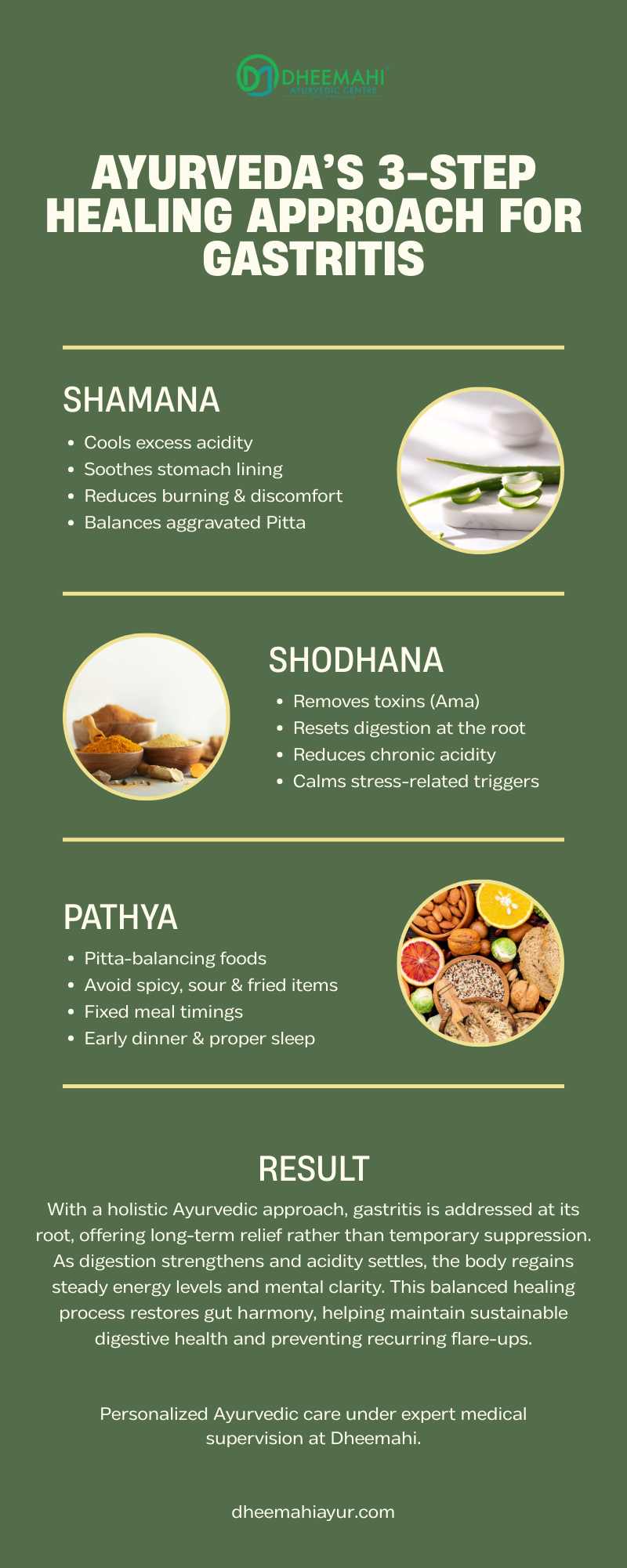
The Dheemahi Healing Protocol: The Three Pillars of Gastritis Treatment
The therapeutic approach at Dheemahi is a structured, classical application of Ayurvedic science, following the three phases of healing: Nidana Parivarjana, Shamana Chikitsa, and Shodhana Chikitsa.
Pillar A: Shamana Chikitsa – Palliative Care and Symptom Management
This phase utilizes potent internal medicines to immediately cool the heat, neutralize excess acid, and begin the healing of the inflamed stomach lining. This is the stage of Pitta Pacification.
Key Ayurvedic Herbal Formulations & Actions:
- Amalaki (Indian Gooseberry): A supreme Rasayana (rejuvenator) for Pitta. Its dominant Amla (sour) taste, counterintuitively, is offset by a strong Madhura Vipaka (sweet post-digestive effect) and powerful Sheeta Virya (cooling potency). It is the ideal Pitta-pacifier, rich in Vitamin C, promoting mucosal repair.
- Yashtimadhu (Licorice Root): Acts as a natural demulcent and cytoprotective agent. It forms a protective coat over the stomach lining, shielding it from corrosive acid, instantly relieving the burning sensation.
- Shatavari: A deeply nourishing and cooling herb that supports the rebuilding of the Shleshma Kala (mucosa), lubricates the digestive tract, and balances aggravated Vata associated with stress.
- Pravala Bhasma or Shankha Bhasma: These traditional mineral preparations act as highly effective natural antacids. They quickly neutralize the excess hydrochloric acid in the stomach, providing rapid relief from heartburn and acidity without the long-term side effects of synthetic PPIs.
- Draksha (Raisins) and Mishri (Cane Sugar): Used in formulations to provide a gentle, cooling, and soothing effect, helping to reduce the overall heat and intensity of Pitta.
These herbal and herbo-mineral compounds are prescribed only after a thorough individual assessment, often in conjunction with specialized preparations like Avipattikar Churna (used carefully to expel excess Pitta) or Sutshekhar Ras.
Pillar B: Shodhana Chikitsa – Deep Detoxification with Panchakarma
For chronic, deeply rooted gastritis where significant Ama and vitiated Pitta are locked in the system, a profound internal cleansing is mandatory to achieve long-term remission. This is the domain of Panchakarma (the Five Actions of Detoxification).
Virechana (Therapeutic Purgation)
Virechana is the gold-standard treatment for chronic Amlapitta and aggravated Pitta Dosha. The process involves preparatory internal and external oleation (Snehana and Swedana) followed by a carefully controlled, medically supervised purgation with herbal oils and decoctions.
- Mechanism of Action: Since the main site of Pitta accumulation is the small intestine (Grahani), Virechana safely flushes out the excess, corrosive Pitta, bile, and circulating toxins (Ama) from the gastrointestinal tract, entirely resetting the body’s metabolic baseline. This acts as a deep systemic cleanse, far beyond a simple laxative effect.
- Result: The elimination of the root inflammatory cause leads to a profound reduction in systemic heat, acidity, and irritability, restoring the purity of the body’s channels (Srotas).
Shirodhara (Oil Pouring Therapy)
Since emotional and mental stress is the primary Nidana (cause) for many IT professionals, treatments that directly soothe the nervous system are essential. Shirodhara—the rhythmic pouring of warm, cooling, medicated oil (like Ksheerabala Tailam) onto the forehead—is unparalleled in this regard.
- Mechanism of Action: It deeply calms the central nervous system, reduces the release of stress hormones like cortisol, and directly interrupts the Vata-Pitta cycle in the head that triggers stomach acid secretion.
- Result: This therapy provides intense mental relaxation, reduces emotional irritability, and breaks the psychosomatic link responsible for stress-induced gastritis flare-ups.
Abhyanga & Cooling Basti
- Abhyanga (Oil Massage): Gentle, cooling full-body massage using Pitta-pacifying oils (such as coconut or sandalwood-based oils) helps to move stagnant Ama, improve circulation, and deeply relax the body.
- Basti (Medicated Enema): Specific cold or cooling herbal enemas (Pitta Shamaka Basti) can be administered in certain complex cases of Amlapitta to regulate the downward movement of Vata and further cool the core body temperature.
At Dheemahi, these Panchakarma therapies are always customized, administered in a tranquil, authentic setting under the continuous supervision of experienced Ayurvedic physicians, ensuring the highest standards of safety and efficacy.
Pillar C: Correcting the Pathya-Apathya (Diet and Lifestyle)
In Ayurveda, the healing that begins with herbs and Panchakarma is sustained only through diligent attention to Pathya (wholesome diet and regimen). This is the cornerstone of long-term wellness and the most important lesson for the busy professional.
The Gastritis Diet: Eating to Balance Pitta
The goal is to adopt foods that are naturally Madhura (sweet), Tikta (bitter), and Kashaya (astringent) in taste, as these naturally pacify Pitta, while avoiding sour, salty, and pungent foods.
| Pathya (Recommended Foods) | Apathya (Foods to Strictly Avoid) |
| Grains: Old rice (aged for 1 year), barley (Yava), and wheat (Godhuma). | Sour/Fermented: Curd/Yogurt, excessive tomatoes, pickles, vinegar, fermented foods (Idli/Dosa/Dhokla). |
| Legumes: Moong Dal (split green gram) and Masoor Dal (red lentils)—must be well-cooked. | Pungent/Spicy: Chilies, black pepper, excessive garlic, ginger, and mustard. |
| Vegetables: White pumpkin, bottle gourd (Lauki), ash gourd (Petha), snake gourd, bitter gourd (Karela), and leafy greens (Palak) in moderation. | Processed/Oily: Fried foods, oily snacks, junk food, and processed or tinned items. |
| Fruits: Sweet apples, sweet grapes, pomegranate, ripe banana, dried figs, and raisins. | Stimulants: Coffee, black tea, colas, carbonated drinks, and all forms of alcohol and tobacco. |
| Dairy: Fresh cow’s milk (if tolerated), Ghee (clarified butter), and Buttermilk (Takra) blended with cooling spices (cumin, coriander). | Heating Beverages: Excessive intake of heating spices in water (e.g., concentrated ginger tea). |
Regimens for Digestive Mastery (Dinacharya and Ratricharya)
- Fixed Meal Timings: Establish a strict, regular rhythm. Eat the heaviest meal at lunchtime (when Agni is strongest) and a light meal by 7:30 PM.
- Avoid Water with Meals: Drink water at room temperature or warm, but always sip it before and after the meal, not during, as excessive water dilutes the digestive fire.
- Mindful Eating: Eat slowly, chew food at least 32 times, and do not eat until the previous meal is fully digested.
- The 90-Minute Rule: Avoid lying down or sleeping for at least 90 minutes after eating dinner to prevent acid reflux (Urdhvaga Amlapitta).
- Sleep Hygiene: The body regenerates and detoxifies best during the Kapha period (10 PM – 2 AM). Aim to be asleep by 10 PM to protect the digestive system from late-night Pitta aggravation.
Integrating the Mind-Gut Axis: Yoga and Meditation
The mental intensity of a competitive career cannot be separated from physical digestion. Ayurveda treats the mind (Manas) and the stomach (Amashaya) as an inseparable unit.At Dheemahi, specific Yoga and Pranayama are integrated into the treatment plan, functioning as therapeutic tools to cool the Pitta Manas (fiery mind).Cooling Pranayama:- Sheetali Pranayama (The Cooling Breath): Inhale through a curled tongue (or through clenched teeth for Sheetkari), and exhale slowly through the nose. This practice literally cools the heat in the head and chest, providing immediate relief from internal burning.
- Anulom Vilom (Alternate Nostril Breathing): Balances Prana Vayu and calms the autonomic nervous system, reducing the stress response that triggers acid production.
- Vajrasana (Thunderbolt Pose): Sitting in this pose for 5-10 minutes immediately after a meal is highly beneficial as it directs blood flow to the digestive organs, actively supporting Agni.
- Balasana (Child’s Pose) and Paschimottanasana (Seated Forward Bend): These postures gently compress the abdomen and calm the mind, relieving tension and easing discomfort.
The Dheemahi Advantage: Authentic Healing in a Nurturing Environment
Choosing Dheemahi Ayurvedic Centre for the treatment of gastritis means entrusting your health to a center that blends profound tradition, clinical expertise, and genuine compassion.
- Five Generations of Lineage: Dheemahi is a living, breathing tradition, offering knowledge preserved and perfected across five generations of Ayurvedic practitioners. This means care is based on authentic, time-tested wisdom, not modern, commercialized protocols.
- Doctor-Led, Individualized Care: Every treatment plan is uniquely designed and monitored by experienced Ayurvedic physicians. This personalized approach ensures the correct herbs, precise Shodhana therapies, and tailored Pathya are prescribed according to the individual’s Prakriti and the specific nature of their Amlapitta.
- Holistic Integration: Healing at Dheemahi is a complete ecosystem: Ayurvedic Medicines, Panchakarma Therapies, Customized Diet, Therapeutic Yoga, and Stress-Reducing Mindfulness are all harmonized for total body, mind, and spirit renewal.
- The Power of Environment: Located in a tranquil, natural setting, the environment itself becomes a therapeutic force. Away from the relentless, Pitta-aggravating pressures of the city and the office, the serene atmosphere promotes natural rejuvenation and allows the mind-gut axis to settle and heal.
Sustained Wellness Support: Recognizing the demands of professional life, Dheemahi provides comprehensive post-treatment support through digital consultations, ensuring the client can successfully integrate their new Ayurvedic lifestyle practices into their high-paced reality, sustaining the relief achieved during their stay.
A Scientific and Sustainable Solution
Ayurveda’s success in treating gastritis lies in its recognition that the stomach is merely the symptom site the root cause is systemic, often involving the mind, liver, and overall metabolism. By methodically employing Shamana to cool the acute fire, Shodhana to cleanse the deep-seated toxins, and Pathya to rebuild long-term health, Dheemahi offers a sustainable solution far superior to symptomatic relief alone.
For the modern professional burdened by chronic acidity and digestive distress, the Ayurvedic treatment for gastritis at Dheemahi is not just a cure for the stomach it is a comprehensive, transformative pathway to reclaiming control over health, energy, and peace of mind. It allows one to thrive in a demanding career without the daily agony of Amlapitta.
If you’re ready to move beyond temporary antacid fixes and embrace a profound, permanent path to digestive wellness, Dheemahi Ayurvedic Centre invites you to discover the enduring power of authentic Ayurvedic healing.
FAQs
Can Ayurveda cure gastritis permanently or does it only control symptoms?
Ayurveda focuses on long-term digestive balance, not just symptom control. By correcting digestion (Agni), calming excess acid (Pitta), removing toxins (Ama), and improving lifestyle habits, Ayurvedic treatment aims to prevent recurring gastritis rather than offering short-term relief. Many patients experience sustained improvement when guidance is followed consistently.
How does Ayurveda explain chronic acidity and burning sensations?
In Ayurveda, gastritis is linked to Amlapitta, caused by aggravated Pitta dosha. Excess internal heat damages the stomach’s protective layer and weakens digestion. Ayurvedic treatment cools this heat, repairs the mucosa, and stabilizes digestion, offering deeper healing.
Why does gastritis keep coming back even after taking antacids?
Antacids suppress acid temporarily but do not heal the inflamed stomach lining or correct the root cause. Stress, irregular meals, excess coffee, poor sleep, and spicy foods continue to disturb digestion. Ayurveda addresses these underlying triggers through diet, detoxification, and stress regulation, reducing recurrence.
How long does Ayurvedic treatment take to show results for gastritis?
Many patients notice:
1–2 weeks: Reduced acidity, burning, and bloating
4–6 weeks: Improved digestion and appetite stability
8–12 weeks: Long-term relief with fewer flare-ups
Results depend on severity, lifestyle, and consistency with guidance.
What foods should be avoided during Ayurvedic gastritis treatment?
Typically avoided foods include:
Spicy, fried, and fermented foods
Excess coffee, alcohol, and carbonated drinks
Late-night meals and overeating
Ayurveda encourages simple, warm, freshly cooked meals that calm digestion and support healing.
Why choose Dheemahi Ayurvedic Centre for gastritis treatment?
People choose Dheemahi because of:
Experienced Ayurvedic doctors with classical training
Personalised diagnosis and treatment, not generic packages
Authentic therapies under medical supervision
Clear dietary and lifestyle guidance for long-term results
Ongoing support to maintain digestive wellness after treatment
Get your online medical consultation with an expert doctor before booking.
The unique approach involves a series of discussion during your initial decision-making process to make sure that we will be able to match your expectations with our treatment. Based on the discussions with you our team of expert doctors will design the best treatment package personalized for your needs.
How our booking process works
1
Medical Questionnaire
Fill our Medical Questionnaire, after that we will get back to you via email/phone.
Discussion with Doctor
Discuss your health condition and expectations with our doctor.
3
Important Information
Carefully read all the important information.
4
Reservation
Confirm the booking by making a payment of 50% advance.
Dheemahi Ayurveda centre is recognized by Government of Kerala
The medicines we use comes from our own GMP certified herbal pharmacy.
One of the best ayurvedic hospital in kerala for classical panchakarma treatment
Daily yoga sessions of an expert yoga guru
All our attendants and therapists are certified as well as given in-house training by our Doctors to learn our way of therapies
In-house kitchen team serves the best authentic, healthy and fresh ayurvedic food
We offer you the best ayurvedic wellness centre experience
In house training sessions led by doctors on ayurveda lifestyle
Ready to Make a
Our Branches :
Dheemahi Ayurvedic Village, Kumarakom, Kottayam, Kerala, India, Pin 6860000
Dheemahi Ayurvedic Centre, Near Neelimangalam Bridge, Kumaranaloor, Perumbaikad.P.O, Kottayam, Kerala, India, Pin 686016
Head Office:
Dheemahi Ayurvedic Pvt Ltd, 12/386, Varaputhara Road, Kumarakom, Kottayam, Kerala, Pin 686563
Call Us Anytime: +91 80 4717 2727
Best Ayurvedic Diabetes Treatment in Kerala
Best Ayurvedic Obesity Treatment In Kerala
Best PCOD Ayurvedic Treatment in Kerala
Bestes Ayurveda-Zentrum in Kerala (auf Deutsch 🇩🇪)
Ayurvedic Pregnancy Care Treatment in Kerala