
Autoimmune Diseases in Ayurveda and the Role of Body Imbalance
Across the globe, societies that once fought infectious epidemics now face a slower, more insidious epidemic — that of autoimmune diseases. These conditions express the paradox of modern health: the same immune system that defends life begins to destroy the body it was designed to protect. In an age characterized by overactivity, processed food, environmental pollution, and high psychological stress, the body’s natural intelligence is quietly being overstimulated and confused. This internal confusion, Ayurveda teaches, is the real root of autoimmunity.
In medical science, autoimmune diseases are defined as chronic disorders in which the immune system mistakenly attacks the body’s own tissues. The result is persistent inflammation, degenerative tissue damage, and dysfunction of organs and systems. These disorders can strike virtually any part of the body — from joints and glands to skin, intestines, and the central nervous system. Because of their complexity, autoimmune diseases are now recognized as a major category of chronic illness worldwide, affecting hundreds of millions of people.
Common examples include rheumatoid arthritis, lupus, psoriasis, multiple sclerosis, ulcerative colitis, and Hashimoto’s thyroiditis. The symptoms vary in intensity and pattern — recurrent fatigue, inflammation, pain, digestive disturbance, hormonal imbalance, or neurological issues — yet all share a single underlying trait: misdirected immunity.
Modern medical research has taken enormous strides in controlling autoimmune flare-ups with immunosuppressive drugs, corticosteroids, and biologics. These therapies reduce inflammation temporarily but often weaken immune balance and produce significant side effects. Most importantly, they rarely resolve the root cause or reestablish the body’s natural state of equilibrium. Ayurveda, on the other hand, emphasizes that restoring internal harmony — rather than merely subduing symptoms — is the key to lasting remission and wellness.
At Dheemahi Ayurvedic Centre, the autoimmune disease in ayurveda is guided by Ayurveda’s “preserving health in the healthy and alleviating disorders in the sick.” The centre combines personalized diagnosis, deep detoxification, rejuvenation therapies, dietary correction, and mindful living guidance to help patients restore natural alignment. The result is not a temporary reprieve, but holistic renewal of body, mind, and spirit.

Schedule a personalized consultation at Dheemahi Ayurveda. Begin your journey to wellness with expert guidance in holistic Ayurvedic care, tailored treatments, and natural healing solutions
How are autoimmune conditions understood in clinical and Ayurvedic terms?
The immune system is a masterpiece of biological intelligence. Through a precisely coordinated network of cells and chemicals, it distinguishes harmful invaders such as bacteria and viruses from self-tissues that must be preserved. However, when internal confusion disrupts this discernment, the immune system begins attacking the body’s own healthy cells. This error of recognition creates chronic inflammation that never fully resolves, leading to progressive damage of organs and tissues.
More than 80 distinct autoimmune diseases have been identified, though they often share overlapping mechanisms. In rheumatoid arthritis, the immune system targets joint linings, causing stiffness and deformity. In multiple sclerosis, it attacks the protective myelin covering nerve cells, impairing brain–body communication. In psoriasis, skin cells proliferate abnormally; in Hashimoto’s thyroiditis, the thyroid gland’s hormone-producing cells are destroyed. Each expression of autoimmunity reflects a deeper imbalance that extends beyond molecular biology—an imbalance rooted in the body’s energetic and metabolic systems.
This is where understanding autoimmune disease in Ayurveda becomes valuable. Ayurveda interprets autoimmunity not by the organ it affects but by the internal disharmony that arises long before structural changes occur. From this perspective, disease is the final stage of cumulative imbalances. Thus, to truly heal autoimmunity, one must identify and correct the foundational imbalance that disrupted the body’s natural intelligence.
What are the Ayurvedic root causes of imbalance and toxicity?
According to Ayurveda, every individual is a unique composition of three vital principles known as Vata, Pitta, and Kapha. They are the fundamental energies that control physiological and psychological functions. Vata governs movement and communication, Pitta transformation and metabolism, and Kapha stability and cohesion. Health exists when these forces remain in functional harmony; illness arises when their equilibrium is lost.
The Role of Agni and Ama
The digestive fire, or Agni, holds a central position in Ayurveda, for it is responsible not only for digestion of food but for all transformative processes, including metabolism, cognition, and immunity. When Agni is strong, digestion is optimal, tissues are nourished, and vitality flows freely. But when Agni weakens — due to poor diet, irregular eating, unresolved stress, or emotional turmoil — digestion becomes incomplete. This leads to the formation of Ama, a thick, sticky byproduct of incomplete metabolism.
[Ama] is considered the root toxin in Ayurveda. It obstructs the channels (Srotas), disturbs chemical communication, and provides a breeding ground for disease. When Ama circulates widely, it interacts with the aggravated doshas. If Pitta is predominant, heat and inflammation follow; if Vata predominates, degenerative changes occur; if Kapha is involved, stagnation and congestion arise.
This dynamic interaction mirrors the pathogenesis of autoimmune disease: the body’s systems become clogged and misinformed. Instead of perceiving harmony, the immune defense begins to perceive threat everywhere, resulting in auto-aggression. The autoimmune process, in Ayurvedic terms, can therefore be understood as Ama-induced immune confusion.
Underlying Causes of Imbalance
- Unwholesome diet: Fried, heavy, or incompatible food combinations confuse digestion.
- Suppressed emotions: Anger, grief, and worry directly affect digestive strength.
- Environmental toxins: Pesticides, metals, and chemicals add to the body’s toxic load.
- Sedentary lifestyle: Low metabolism causes Kapha dominance, stiffness, and stagnation.
- Disordered routine: Irregular sleep or meal times weaken natural rhythms.
- Overuse of suppressive drugs: Constant immune suppression dulls the body’s self-regulation.
When these disturbances persist for years, the body’s intelligence loses discrimination between self and non-self — the central defect seen in all autoimmune processes.
What is Ojas and how does it relate to immunity?
In Ayurveda, the ultimate marker of health and immunity is Ojas. It is not merely a biochemical substance but the refined essence of all bodily tissues, produced when digestion and metabolism function in perfect balance. Ojas governs vitality, endurance, mental clarity, emotional stability, and resistance to disease — making it a central concept when understanding autoimmune disease in Ayurveda.
When Ojas is abundant, immunity is balanced and self-healing occurs naturally. When Ojas is depleted — through excessive stress, overwork, poor diet, or chronic toxins — vitality declines and the immune system becomes hypersensitive. This depletion predisposes individuals to autoimmune disease and degenerative aging.
Therefore, in Ayurvedic management, removing Ama and strengthening Ojas are inseparable goals. Detoxification clears confusion, while rejuvenation restores coherence. Together, they reset the body’s capacity for intelligent self-regulation.
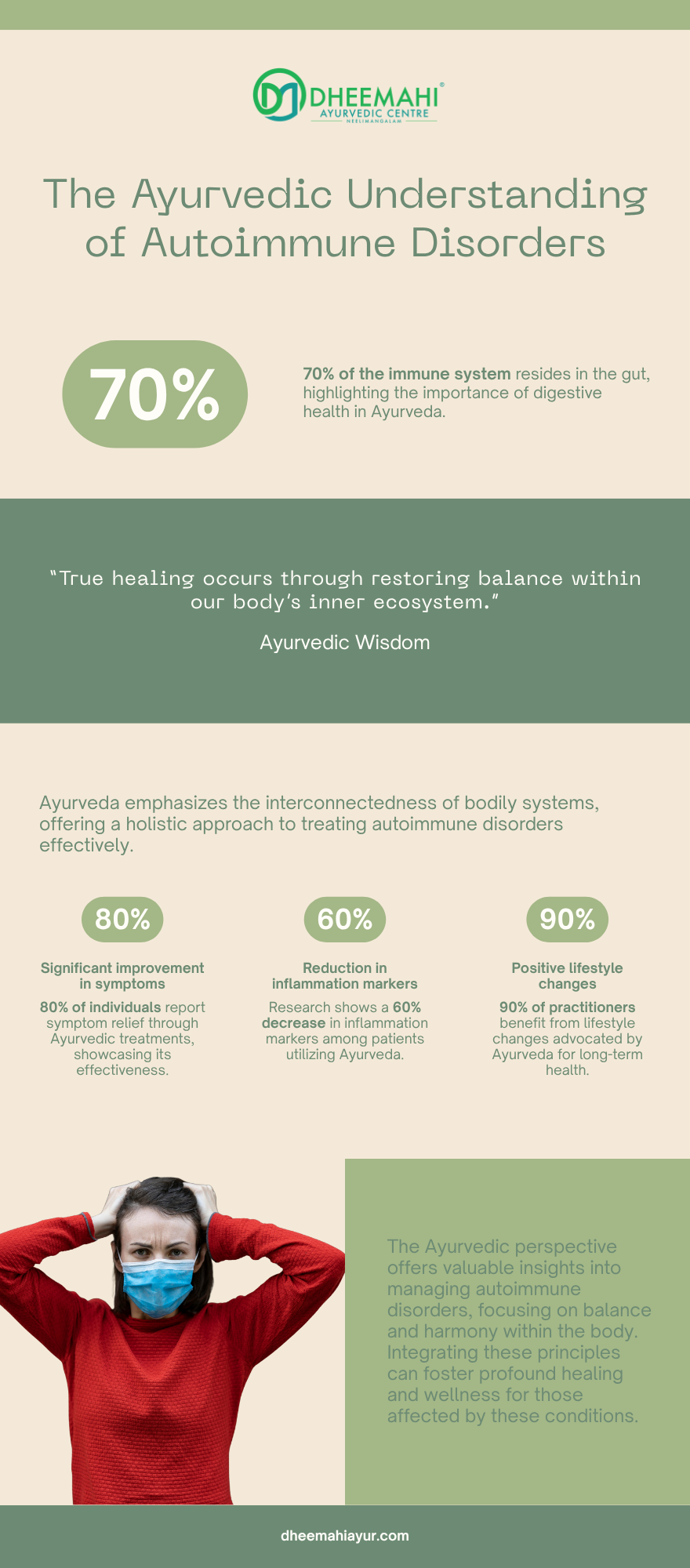
How does Ayurveda view specific autoimmune disorders?
The Ayurvedic Understanding of Key Autoimmune Disorders
Psoriasis (Kitibha Kushtha)
Psoriasis expresses the clash of toxins and immunity on the body’s largest organ, the skin. Ayurveda categorizes it under Kitibha Kushtha, a form of chronic skin disorder. It originates from vitiation of Vata and Kapha, combined with contaminated blood (Rakta Dushti). Toxins from poor digestion lodge in the skin and blood channels, creating scaling, dryness, and itching.
Treatment focuses on multi-level purification — both internal and external. Panchakarma therapies such as Virechana (purgation) cleanse Pitta-related heat and toxins, while medicated oil therapies soothe dryness. Herbs like Manjistha, Neem, and Turmeric detoxify the blood. Meditation and emotional counseling are advised because stress sharply worsens recurrences.
Ulcerative Colitis (Pittaja Grahani)
This intestinal inflammatory condition reflects exaggerated Pitta and accumulation of Ama in the gut. Continuous heat damages intestinal lining, causing ulcers and bleeding. The Ayurvedic approach cools and stabilizes digestion through mild Panchakarma, supportive herbs like Shatavari, and soothing diets consisting of rice gruel, ghee, and boiled vegetables. Restoring regular meal timing is vital. Psychological calmness is cultivated through breathing practices and guided relaxation, since flare-ups often coincide with emotional agitation.
Atopic Dermatitis (Vicharchika)
Atopic dermatitis or eczema arises from a combination of Kapha-Pitta derangement and sensitivity to allergens. According to Ayurveda, Vicharchika develops when emotional stress disturbs metabolism and allows toxins to accumulate in skin tissue. Therapy involves purifying blood through decoctions like Triphala Kwatha and applying medicated ghee to remove dryness. Internal cooling herbs reduce itching, while mild dietary and lifestyle corrections allow long-term control.
Rheumatoid Arthritis (Aamavata)
This systemic joint disease exemplifies the classical Ayurvedic disorder Aamavata. Toxins produced by poor digestion combine with Vata and accumulate in joints, causing swelling, pain, and stiffness. If not treated early, deformity follows. Management involves removing Ama using Langhana (lightening diet), Swedana (fomentation), and medicated Basti. Herbal preparations containing Guggulu, Rasnadi Kwatha, and Dashamoola strengthen digestion and remove inflammation. Gentle yoga preserves joint flexibility and circulation.
Multiple Sclerosis
In autoimmune neuroscience, multiple sclerosis occurs when the immune system attacks myelin, the insulating sheath of neurons. Ayurveda interprets this as degeneration of Majja Dhatu caused by aggravated Vata and depletion of Ojas. Treatment restores nourishment to the nervous system. Therapies such as Shirodhara (pouring medicated oil on the forehead), Nasya (nasal therapy), and Basti (enema) calm the fluctuations of Vata. Rejuvenative herbs like Ashwagandha, Brahmi, and Shankhpushpi act as nerve tonics. Patients are advised to maintain regular routines and avoid stress that increases dryness and fatigue.
Hashimoto’s Thyroiditis
An autoimmune destruction of thyroid tissue leads to disturbed metabolism. Ayurveda sees this as Kapha-Vata aggravation with sluggish Agni. Therapies focus on stimulating inner fire through mild detoxification, followed by metabolic enhancers like Guggulu and Trikatu (ginger, pepper, and long pepper). Rejuvenating tonics restore endocrine balance, and lifestyle advice includes maintaining warmth, reducing dairy overload, and managing anxiety.
Lupus
Lupus is systemic, affecting multiple tissues simultaneously. Ayurveda considers it a Tridoshic condition dominated by Pitta aggravation and Ojas depletion. Pitta purification, nourishment of tissues, and Rasayana rejuvenation are essential strategies. Herbs such as Amalaki, Shatavari, and Gokshura rebuild immune intelligence across organ systems.
Autoimmune Neuropathies
Disorders like Guillain-Barré syndrome show acute weakness and nerve inflammation, paralleling aggravated Vata in the nervous tissues. Ayurveda uses Basti therapy with medicated milk or oils, along with nourishing diet and rest. Emotional stability and positive mental attitude are strongly emphasized as therapeutic agents.
How does Dheemahi Ayurvedic Centre deliver healing for autoimmunity?
At Dheemahi Ayurvedic Centre, autoimmune disease in ayurveda treatment is not a mechanical procedure — it is a guided transformation of body, mind, and spirit. The healing journey unfolds in structured phases, restoring balance at multiple levels.
1. What Is the First Step — How Is Diagnosis Done? (Complete Assessment)
Healing begins with a comprehensive consultation that studies:
- Prakriti (natural constitution)
- Vikriti (current imbalance)
- Digestive strength
- Stress patterns and emotional tendencies
This multidimensional analysis identifies where disharmony started, allowing a fully personalized healing protocol to be designed.
2. Why Is Panchakarma Necessary in Autoimmune Disorders?
Panchakarma — Ayurveda’s scientific detox approach — forms the foundation of reversing autoimmune responses.
- Cleansing Therapies Used:
Vamana – Removes excess Kapha - Virechana – Clears Pitta & digestive toxins
- Basti – Balances Vata and nourishes tissues
- Nasya – Cleanses the head & neck channels
- Rakta Mokshana – Purifies blood in inflammatory skin/joint conditions
Each therapy is selected based on age, strength, chronicity, and symptoms. Progress is tracked through digestion, energy levels, and mood changes.
3. What Happens After Detox? – Rasayana Rejuvenation
After purification, the system becomes receptive to rejuvenation. Rasayana therapy strengthens immunity and nourishes tissues.
Key Rasayana Tools:
- Chyawanprash
- Ashwagandha
- Shatavari
- Brahma Rasayana
- Ayurvedic ghee formulations
- Abhyanga (oil massage), yoga & meditation
This phase supports nervous system repair, hormonal balance, and disease resistance.
4. How Is Mental Health Linked with Immunity?
Autoimmune disorders often worsen with stress. Dheemahi integrates mind-body therapies such as:
- Pranayama
- Meditation
- Yoga Nidra
- Emotional counseling
These practices reduce stress response, calm the nervous system, and improve Agni (digestive fire).
5. What Dietary & Lifestyle Changes Support Healing?
Diet becomes medicine. Patients follow doshic-balanced meals with warm, freshly cooked food. Avoided combinations include:
- Milk + sour fruits
- Heavy raw salads
- Cold or processed foods
Lifestyle routines include natural sleep cycles, yoga, self-oil massage, and mindful eating to prevent relapse.
6. Does Dheemahi Provide Long-Term Support?
Yes. Continuous education helps patients recognize early signs of imbalance and respond proactively. The aim is self-reliance, not dependency. Over time, patients often experience:
- Better sleep
- Emotional stability
- Clearer thinking
Restoration of Ojas (vital immunity)
How can autoimmunity be prevented according to Ayurveda?
Ayurveda regards prevention as the crown of medicine. Preventive health not only avoids disease but also sustains creativity and joy. A few enduring guidelines from classical texts form the foundation of immunity cultivation:
- Dinacharya (Daily routine): Regular habits of waking, bathing, feeding, and resting synchronize body clocks.
- Ritucharya (Seasonal adaptation): Tailoring food and activity with changing seasons maintains equilibrium.
- Ahara Vidhi (Rules of eating): Eat when hungry, in moderation, and in peaceful settings.
- Sadvrtta (Right conduct): Ethical living, compassion, and emotional moderation enhance Ojas.
- Periodic cleansing: Light fasting, herbal teas, and seasonal Panchakarma keep Ama minimal.
For those prone to autoimmune tendencies — people with irregular digestion, chronic stress, or family predisposition — these preventive routines function as powerful fortifications.
Understanding Autoimmunity as a Message
Autoimmune disorders reveal a profound truth: the body attacks itself when its sense of inner identity becomes distorted. Likewise, at a psychological level, modern life often separates humans from their natural rhythms, leading to alienation from self. Ayurveda interprets such conditions as invitations to realign — physically, mentally, and spiritually. When digestion is restored, emotions expressed, and lifestyle tuned to natural cycles, the immune system regains clarity about what belongs to it and what does not.
The illness, then, becomes not a punishment but a teacher — directing awareness back toward balance and simplicity. This understanding reframes autoimmunity as an opportunity for inner reconstruction, rather than merely a condition to be conquered.
Case Reflections from Dheemahi
Patients at Dheemahi Ayurvedic Centre often arrive after years of conventional treatment with limited improvement. The integrative Ayurvedic approach frequently yields transformation through disciplined care.
A woman suffering from psoriasis for over a decade underwent intensive Panchakarma, followed by blood purification and Rasayana therapy. Within two months her lesions diminished drastically, and anxiety that had persisted for years subsided. Regular follow-ups maintained her remission.
Another patient diagnosed with ulcerative colitis achieved normal bowel habits and appetite after dietary regulation and colon-specific therapies. Rebuilding Agni changed not only his digestive health but his mental confidence.
These examples demonstrate Ayurveda’s unique strength: rather than fighting disease fragments, it rebuilds the wholeness from which vitality naturally emerges.
Conclusion:
Autoimmune diseases embody an inner dialogue gone wrong — life energy turned against itself. Recovery, in Ayurveda, is not about suppressing that dialogue but listening deeply until harmony returns. This understanding forms the foundation of how autoimmune disease in Ayurveda is approached. Ayurveda views the human being as a symphony of energies — physical torque, emotional vibration, and spiritual awareness — each needing resonance with the others.
By purifying Ama, balancing Doshas, rekindling Agni, and nurturing Ojas, Ayurveda restores that resonance. Modern lifestyles of overstimulation and disconnection can be rebalanced through conscious daily living, suitable diet, and mindful rest.
At Dheemahi Ayurvedic Centre, healing autoimmune disease is not simply neutralizing an illness. It is the art of teaching the body to remember harmony. Through ancient science and compassionate guidance, patients are reminded that within them exists an innate equilibrium deeper than disorder. When body, mind, and consciousness align again, the immune system ceases its misguided war and resumes its rightful role — the guardian of life and intelligence.
Ayurveda thus reminds us that health is our natural state, not something to be earned through struggle. It thrives wherever clarity, rhythm, and self-awareness are honored. Restoring balance is restoring identity. In that remembrance lies the end of autoimmunity and the beginning of renewed wholeness.
FAQs
How does Ayurveda view immune system “confusion” in autoimmune disorders?
Ayurveda interprets immune confusion as the result of Ama obstructing bodily channels and disturbing the body’s natural intelligence. This leads to miscommunication between tissues and immune responses. Restoring clarity begins with cleansing therapies such as Panchakarma, which Dheemahi uses as the foundation for autoimmune healing.
Can Ayurveda help with specific autoimmune conditions like psoriasis, rheumatoid arthritis, or MS?
Yes. Ayurveda offers targeted, condition-specific protocols. For example:
– Psoriasis (Kitibha Kushtha) is treated through blood purification and Pitta-Kapha balancing.
– Rheumatoid arthritis (Aamavata) responds to Ama-clearing therapies and Vata pacification.
– Multiple sclerosis is approached through Majja Dhatu nourishment and Vata stabilization.
Dheemahi clinicians personalize therapies based on the patient’s constitution and chronicity.
How does Dheemahi Ayurvedic Centre diagnose autoimmune disorders?
Diagnosis is holistic and includes evaluation of Prakriti, Vikriti, digestive strength, stress patterns, emotional tendencies, and lifestyle. This multidimensional Ayurvedic assessment helps identify the exact imbalance that triggered the autoimmune condition.
Why is Panchakarma considered essential for autoimmune healing at Dheemahi?
Panchakarma helps eliminate Ama, reset Dosha balance, and restore the body’s internal communication system. Procedures like Virechana, Basti, and Nasya are customized at Dheemahi based on age, chronicity, symptoms, and body strength—making it a core healing step rather than a general detox.
What dietary habits help in controlling autoimmune flare-ups?
Warm, freshly cooked, dosha-appropriate meals support strong Agni. Patients are advised to avoid cold foods, incompatible combinations (e.g., milk + sour fruits), processed items, and overeating. Dheemahi provides personalized diet charts to maintain digestive balance and reduce toxin formation.
How long does it take to see results with Ayurvedic treatment for autoimmunity?
The healing timeline depends on chronicity, severity, digestion strength, and emotional patterns. While some patients feel improvement within weeks after Panchakarma, deeper autoimmune regulation and tissue repair may take 2–6 months. Dheemahi offers ongoing follow-ups to support stable recovery.
Why is Dheemahi Ayurvedic Centre recommended for autoimmune healing?
Dheemahi’s strength lies in:
✔ Personalized, constitution-based diagnosis
✔ Clinical Panchakarma protocols
✔ Evidence-informed Rasayana therapy
✔ Mind-body integration
✔ Long-term patient education and follow-up
This comprehensive system helps restore body balance and rebuild immune intelligence, making it a trusted destination for autoimmune healing.
Get your online medical consultation with an expert doctor before booking.
The unique approach involves a series of discussion during your initial decision-making process to make sure that we will be able to match your expectations with our treatment. Based on the discussions with you our team of expert doctors will design the best treatment package personalized for your needs.
How our booking process works
1
Medical Questionnaire
Fill our Medical Questionnaire, after that we will get back to you via email/phone.
Discussion with Doctor
Discuss your health condition and expectations with our doctor.
3
Important Information
Carefully read all the important information.
4
Reservation
Confirm the booking by making a payment of 50% advance.
Dheemahi Ayurveda centre is recognized by Government of Kerala
The medicines we use comes from our own GMP certified herbal pharmacy.
One of the best ayurvedic hospital in kerala for classical panchakarma treatment
Daily yoga sessions of an expert yoga guru
All our attendants and therapists are certified as well as given in-house training by our Doctors to learn our way of therapies
In-house kitchen team serves the best authentic, healthy and fresh ayurvedic food
We offer you the best ayurvedic wellness centre experience
In house training sessions led by doctors on ayurveda lifestyle
Ready to Make a
Our Branches :
Dheemahi Ayurvedic Village, Kumarakom, Kottayam, Kerala, India, Pin 6860000
Dheemahi Ayurvedic Centre, Near Neelimangalam Bridge, Kumaranaloor, Perumbaikad.P.O, Kottayam, Kerala, India, Pin 686016
Head Office:
Dheemahi Ayurvedic Pvt Ltd, 12/386, Varaputhara Road, Kumarakom, Kottayam, Kerala, Pin 686563
Call Us Anytime: +91 80 4717 2727
Best Ayurvedic Diabetes Treatment in Kerala
Best Ayurvedic Obesity Treatment In Kerala
Best PCOD Ayurvedic Treatment in Kerala
Bestes Ayurveda-Zentrum in Kerala (auf Deutsch 🇩🇪)
Ayurvedic Pregnancy Care Treatment in Kerala